
Table of Contents
Have you ever wondered how modern dentistry has transformed surgical procedures from anxiety-inducing experiences to precisely planned, comfortable treatments? Dentists understand that the prospect of oral surgery can feel overwhelming. Whether you’re facing wisdom tooth extraction, dental implant placement, or another surgical procedure, knowing that your treatment is planned meticulously can provide tremendous peace of mind. Dental practices has embraced cutting-edge technology that eliminates guesswork and ensures optimal outcomes for every patient seeking oral surgery.
Key Takeaways
- 3D Cone Beam CT scanning creates detailed three-dimensional views that allow surgeons to examine oral anatomy from every angle with remarkable clarity.
- Computer-guided technology ensures implant placement with accuracy measured in fractions of millimeters while minimizing tissue trauma.
- Dentists offer comprehensive pre-surgical planning that reduces chair time and often completes procedures in one appointment.
- Oral surgery utilizes soft tissue lasers for more comfortable procedures with minimal bleeding and faster healing times.
- The practice’s digital scanning technology eliminates uncomfortable traditional impressions while creating perfect virtual models for surgical guides.
The Technology Behind Precision Oral Surgery
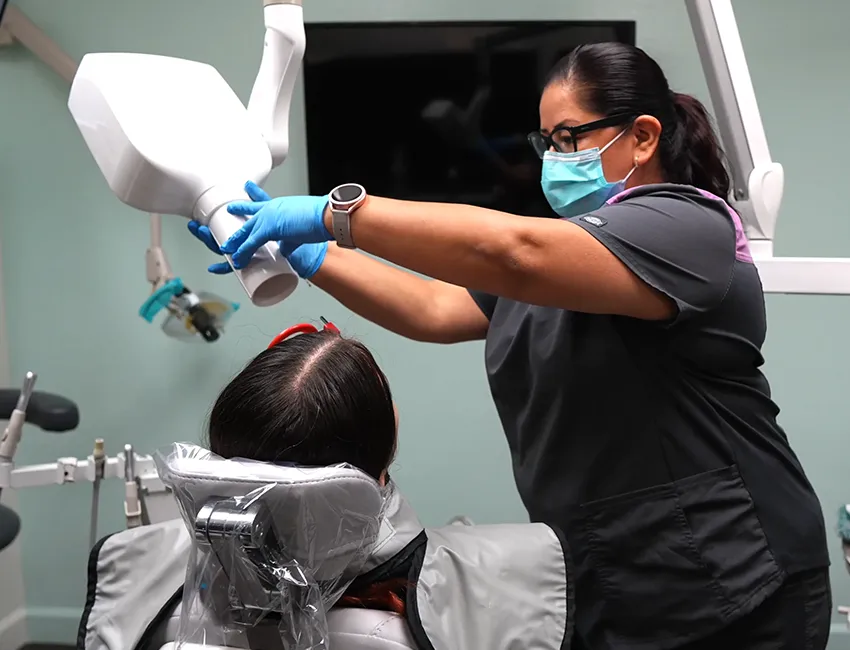
When you choose an expert dentist for your surgical needs, you benefit from years of advanced training combined with state-of-the-art equipment. The technology suite includes 3D Cone Beam CT scanning that creates detailed, three-dimensional views of your teeth, jawbone, nerve pathways, and surrounding structures. Unlike traditional X-rays that provide flat, two-dimensional images, these comprehensive scans allow surgeons to examine your oral anatomy from every angle with remarkable clarity. Using specialized software, the dental team can virtually plan your entire procedure before you even sit in the dental chair, determining ideal implant placement, mapping extraction paths, and identifying potential complications before surgery begins.
Dentists eliminate the need for messy, uncomfortable traditional impression materials with digital scanning technology that creates perfect virtual models of your mouth for surgical guides and restorations. Intraoral cameras provide magnified, high-resolution images of areas otherwise difficult to visualize, enhancing diagnostic capabilities. Soft tissue lasers also enable more comfortable procedures with minimal bleeding and faster healing, often eliminating the need for sutures.
Why Technology Matters for Your Oral Surgery
The advanced technology isn’t just impressive—it fundamentally transforms your surgical experience. Patients seeking oral surgery benefit from:
- Enhanced Precision : Computer-guided surgery allows for implant placement with accuracy measured in fractions of millimeters. This precision minimizes trauma to surrounding tissues and creates optimal conditions for successful healing and integration.
- Reduced Treatment Time : Comprehensive pre-surgical planning minimizes your time in the chair. Procedures that once required multiple visits can often be completed in a single appointment.
- Improved Comfort : Precise surgical techniques mean less tissue disturbance, reducing post-operative discomfort and accelerating recovery.
- Predictable Outcomes : Virtual treatment planning eliminates surprises during your procedure. An expert dentist can visualize the final result before surgery, ensuring aesthetic and functional goals are achieved.
- Decreased Anxiety : Understanding what will happen during your procedure helps alleviate fears. Modern technology allows dentists to walk you through each treatment plan step, answering questions and addressing concerns before your surgery date.
What Happens at Your Oral Surgery Appointment
Your journey to optimal oral health follows a carefully designed pathway that prioritizes both your comfort and treatment success. Here’s what to expect:
- Comprehensive Examination : During your initial consultation, an expert dentist performs a thorough evaluation of your oral health and obtains detailed 3D imaging of your jaw and teeth. This allows for precise diagnosis and identification of any underlying issues that might affect your surgical outcome.
- Personalized Treatment Planning : Using advanced software, your surgical procedure is virtually planned from start to finish, with every angle and measurement precisely calculated to ensure optimal placement and function while avoiding vital structures like nerves and sinuses.
- Pre-Surgical Preparation : The dental team thoroughly reviews your medical history and discusses anesthesia options tailored to your comfort needs and procedure complexity, ensuring you’ll be completely comfortable throughout your treatment.
- Day of Surgery : You’ll arrive at a prepared surgical environment, where your procedure will follow the exact specifications determined during the planning phase. Computer-guided technology will ensure that each step proceeds with pinpoint accuracy.
- Recovery Guidance : Before you leave, you’ll receive detailed aftercare instructions tailored to your procedure and individual healing needs, prescription medications if necessary, and contact information for any questions or concerns.
How Technology Enhances Different Types of Oral Surgery
Your dentist customizes the technological approach to meet your specific surgical needs. 3D imaging and computer-guided surgery ensure precise implant positioning for optimal function and aesthetics, allowing dentists to determine ideal implant placement before any incisions. This technology simplifies complex extractions by accurately visualizing wisdom teeth roots in relation to critical structures, minimizing trauma and complications.
For patients needing jawbone enhancement before implants, dentists use advanced imaging to assess the precise amount of bone grafting material required, increasing the predictability of outcomes. Additionally, advanced tools enable effective surgical interventions for temporomandibular joint disorders and precise corrections for skeletal irregularities, enhancing both function and facial aesthetics.